Bank Capital Is Not Cash: What Makes a Bank Resilient?
Calls for banks to hold more capital can sound like instructions to stack extra cash in a vault. That misses the point. Capital and liquidity protect a bank against different problems.
Reuters reported on 23 September that Switzerland’s upper house backed tougher capital rules for UBS’s foreign units. The proposal still needs further parliamentary approval. The debate raises a broader question: what actually makes a bank resilient?
Capital provides a cushion against losses. Common equity includes money raised from shareholders and profits retained in the business. It helps fund loans and other assets; it is not a separate pile of cash waiting to be spent.
Take a simplified example: a bank has $100 of assets, owes depositors and other creditors $90, and has $10 of equity. If its assets lose $4 in value, equity falls to $6. The loss has reduced the owners’ stake, even if no cash leaves the bank that day. These are illustrative figures, not a regulatory capital-ratio calculation.
Liquidity answers a different question: can the bank meet payments and withdrawals when they fall due? A loan may be valuable and performing well, but it cannot necessarily be turned into cash quickly without taking a loss.
A bank therefore needs both the capacity to absorb losses and access to cash. A healthy equity position does not, by itself, guarantee it can handle a sudden rush of withdrawals.
Stronger equity funding can improve resilience, but it also changes shareholder economics. For the same profit, spreading earnings across a larger equity base reduces return on equity. That arithmetic helps explain why capital proposals become contentious; it does not prove that more capital destroys value.
The useful distinction is simple: capital helps a bank survive losses; liquidity helps it make payments on time. Reading bank headlines through both lenses gives a clearer picture than treating either measure as a complete safety test.
Sources: Reuters, via Euronext, 23 September 2026; Bank of England: Bank capital and liquidity, 17 September 2013; ECB Banking Supervision: Why do banks need capital? Updated 21 July 2025.
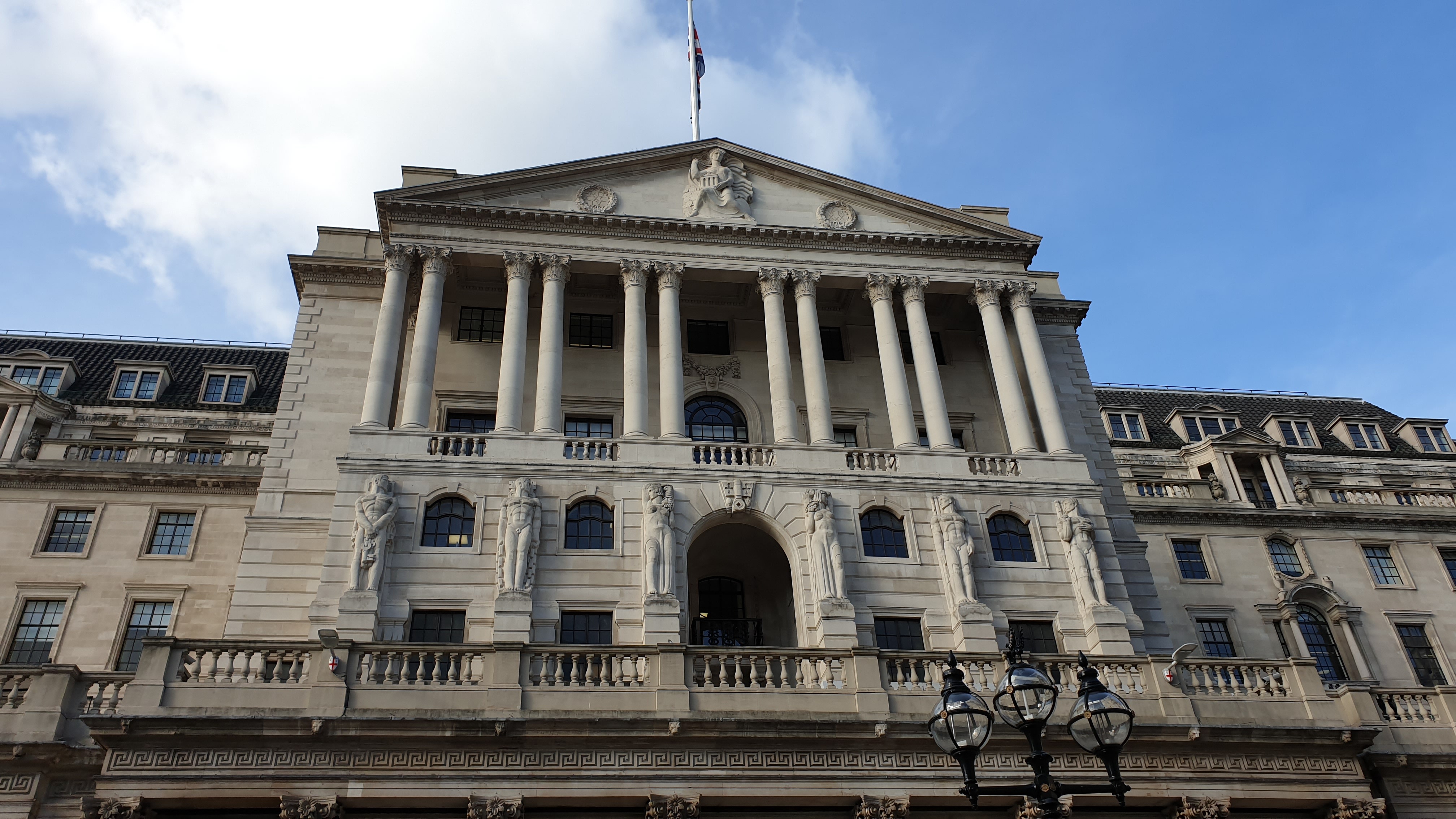
Cover: The Bank of England in London, 11 October 2021. Illustrative file photograph. Photo: Michael C / Wikimedia Commons, CC0 1.0. Cropped for display.