Why Slower Inflation Does Not Mean Lower Prices
Original explainer
A falling inflation rate can coexist with an expensive weekly shop. The distinction is between the speed at which prices change and the level they have already reached. Slower increases do not reverse earlier ones.
Consider a hypothetical fixed basket costing AED100. After a 10% increase, it costs AED110. If inflation then slows to 2% the next year, it becomes AED112.20, not AED102. The rate has fallen, but the basket is still 12.2% more expensive than at the start. These are illustrative figures, not UAE inflation data.
This slowdown in positive inflation is disinflation. Deflation means a sustained decline in the general price level. A cheaper product or a temporary discount does not by itself establish economy-wide deflation.
The headline rate is also an average. Inflation indices combine goods and services using weights that reflect spending patterns. Housing, food and transport do not carry equal weight, and not every price has to move in the same direction.
That is why a household's bills can diverge from the national reading. Someone spending a larger share on categories with faster price rises may experience more inflation than the average; another household may face less.
When reading an inflation headline, separate three questions: are prices rising more slowly, are they actually falling, and how far have they moved over several years? Each describes a different part of the cost-of-living picture.
Sources: St. Louis Fed explanation; ECB inflation guide; BLS CPI questions and answers.
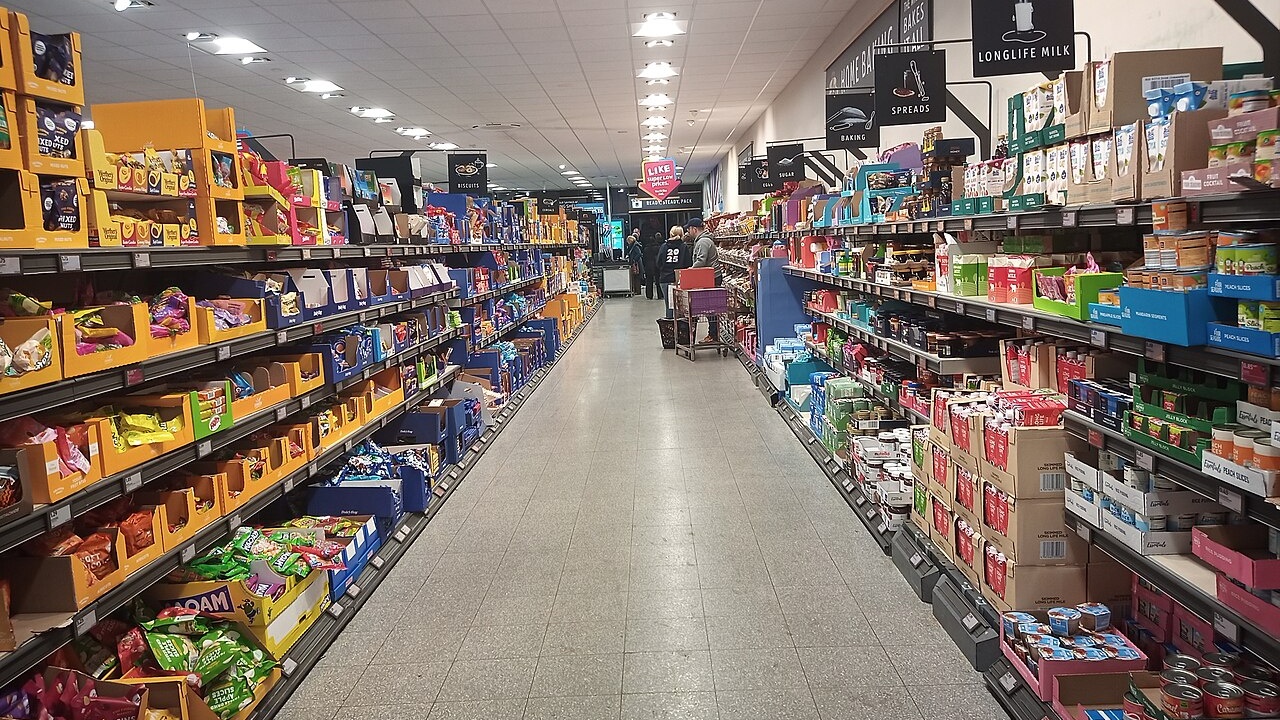
Archival photo (2025): Aldi supermarket, Wetherby, England. Mtaylor848 / Wikimedia Commons, CC BY-SA 4.0. Cropped to 16:9 by Morval Universal; cropped image available under the same licence.